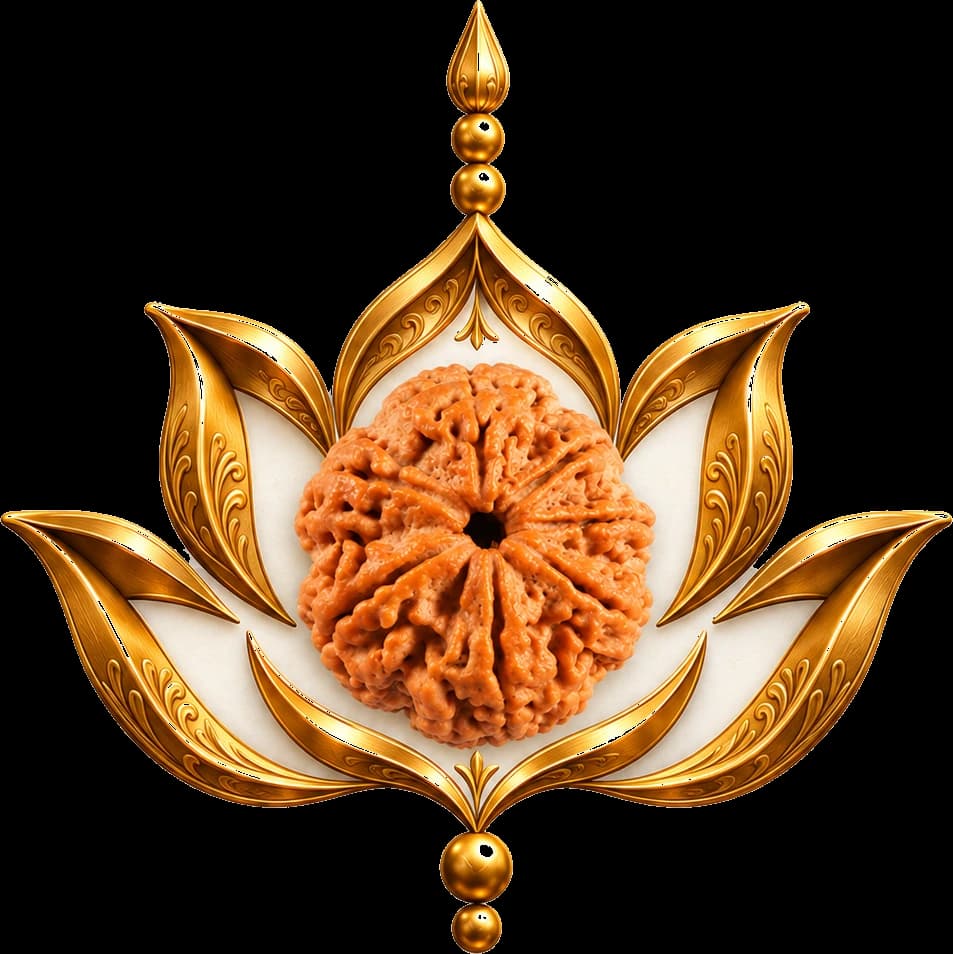
7 MukhiPhotograph coming soon
7 lines · 7 chambers
7 Mukhi
Saturn (Shani)
CommonPrice on request
Your basket
Empty. While we confirm our price list, every bead is priced on request: tell us the bead and the size, and we quote it with its X-ray. There is no online checkout: you order through our contact form, by email or on WhatsApp.
Ask about a beadBrowse the beadsBy purpose
Traditionally worn in pursuit of abundance and financial stability.
7 lines · 7 chambers
Saturn (Shani)
20 lines · 20 chambers
Moon (attribution varies)
21 lines · 21 chambers
Jupiter (attribution varies)
22 lines · 22 chambers
Beyond planets (attribution varies)
23 lines · 23 chambers
Beyond planets (attribution varies)
For money and stability, the bead people ask for first is the 7 Mukhi, given to Goddess Mahalakshmi.
The other beads in this grouping — 20, 21, 22 and 23 Mukhi — are very rare, and their attributions vary between sources. They are collector’s beads as much as worn ones. If you are buying for prosperity on an ordinary budget, the 7 Mukhi is the honest recommendation.
| Bead | Presiding deity | Planet | Chakra | Rarity | Worn traditionally for |
|---|---|---|---|---|---|
| 7 Mukhi | Goddess Mahalakshmi | Saturn (Shani) | Manipura (Solar Plexus) | Common | Wealth flow, business prosperity, relief from Shani dasha, career stability |
| 20 MukhiAttributions vary | Brahma / Janardan | Moon (varies) | Sahasrara (Crown) | Exclusive | Balances material and spiritual growth, wisdom, all-round abundance |
| 21 MukhiAttributions vary | Lord Kubera | Jupiter (varies) | All chakras | Ultra rare | Ultimate wealth bead; multi-generational abundance and business expansion |
| 22 MukhiAttributions vary | Katyayani / Shiva | Beyond planets | All chakras | Ultra rare | Complete protection and abundance combined; collector-grade rarity |
| 23 MukhiAttributions vary | Shiva-Shakti | Beyond planets | All chakras | Ultra rare | Emotional strength plus material abundance when both are blocked |
The beads most often chosen are 7 Mukhi, 20 Mukhi, 21 Mukhi, 22 Mukhi. These are traditional associations, not treatments — if you are dealing with something serious, see a doctor as well.
We will not give you a number, because we would be making it up. Traditionally a bead is worn continuously and treated as part of a practice rather than as a device with an effect date.
These are traditional associations recorded in Vedic and Puranic sources. They are described here as tradition, not as medical or therapeutic claims, and no bead is a substitute for medical care.