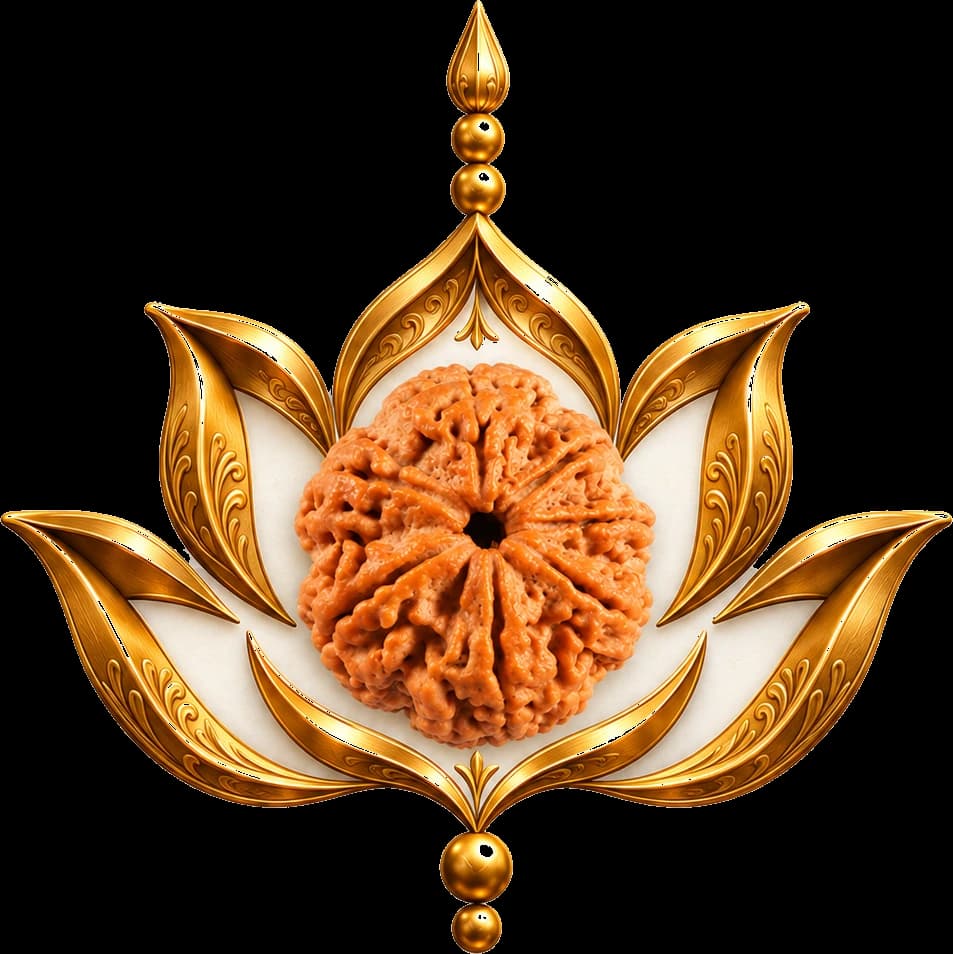
Rudraksha price in Nepal: what sets it, and how to judge a quote in 2026
Last updated · By Jeshan Rai, second-generation grower who runs the farm at Nepal Rudraksha Dana
What actually moves the price of a Rudraksha in Nepal, a dated account of what Chinese demand did to it, and how to tell a fair quote from a bad one.
The short answer
The Rudraksha price in Nepal depends on the face count first, then the diameter in millimetres, then the surface: a common 5 mukhi is the cheapest face and rare faces cost far more. Nepal Rudraksha Dana grows, sorts and X-rays every bead in the Arun Valley, and prices each on request while it confirms its price list.
Key facts
- We sort every bead by face count first, then by diameter in millimetres, then by surface condition. (Farm records, every season)
- While we confirm our price list, every bead is priced on request: tell us the bead and the size, and we quote it with its X-ray. There is no online checkout: you order through our contact form, by email or on WhatsApp. (Farm records, as of September 2026)
- Nepal Rudraksha Dana X-rays every bead it sells, and a bead whose chamber count disagrees with its surface lines is rejected rather than graded down. (Farm records, every season)
- In our part of the Arun Valley, the average household grows more than 300 Rudraksha trees. (Farm records, as of September 2026)
- Before Chinese demand rose, common five-faced Rudraksha sold for about NPR 30 a kilo; by 2026 single seeds reached NPR 2,000. (The Tribune / ANI, June 2026)
- Nepal’s recorded Rudraksha exports to China averaged NPR 195 a kilo in 2018–19 and NPR 93 a kilo in 2020–21. (Department of Customs, via Scroll, 2022)
How much does a Rudraksha cost in Nepal?
A Rudraksha in Nepal costs least as a common 5 mukhi and far more as a rare face. The number of faces sets the range; the diameter in millimetres sets where in that range a bead sits; the surface decides whether it makes the grade at all.
We do not print a price list on this page, and all our Rudraksha beads are priced on request while we confirm our price list: tell us the bead and the size, and we quote it with its X-ray. When we quote, we quote in US dollars; rupee figures on this site are dated conversions, not a separate Nepal price.
How much does a 5 mukhi Rudraksha cost in Nepal?
A 5 mukhi Rudraksha, or panchmukhi, is the least expensive Rudraksha in Nepal, and its price rises with the diameter. It is the most common face on any Rudraksha tree, which is why a low price for one is not a warning sign. Ours are priced on request by measured size.
More on the bead itself, including how to choose a size, is in our guide to 5 mukhi Rudraksha benefits.
How much does a 7 mukhi Rudraksha cost in Nepal?
A 7 mukhi Rudraksha costs more than a 5 mukhi of the same size, because it is rarer on the tree, and it follows the same rule: each step up in size grade costs more than the one below. A 7 mukhi offered at a 5 mukhi price deserves an X-ray, because a carved seventh line is the usual fake.
The bead, and what tradition says it is for, is described in full in our guide to 7 mukhi Rudraksha benefits.
How much does a 1 mukhi Rudraksha cost in Nepal?
We price every 1 mukhi (ek mukhi) Rudraksha on request, because each one is different and each is X-rayed and quoted individually. The 1 mukhi we sell is the Nepali half-moon, or Kaju, form. The round Nepali 1 mukhi almost never reaches the market, and a "round Nepali 1 mukhi" at an ordinary price should be treated as a fake until proven otherwise.
Why the two forms differ so much in price, and how fakes are made, is covered in our guide to the 1 mukhi Rudraksha.
What makes one Rudraksha cost more than another?
Three things set the price of a Rudraksha, in this order: how rare its face count is, how large it is in millimetres, and the condition of its surface. We sort in the same order, so a price on our list always reads face first, then size, then surface.
| Factor | What it means | Effect on price |
|---|---|---|
| Face count (mukhi) | How many natural lines and chambers the bead has | The largest effect. Rare faces start far above common ones |
| Diameter | Measured across the bead in millimetres | Within one face count, each size grade costs more than the last |
| Surface | Whether the ridges are whole, sharp and free of cracks or chips | A damaged surface lowers the grade or rules a bead out |
| Origin | Nepali or Indonesian | Nepali beads of the same face are usually larger and usually cost more |
Origin matters most when it is misrepresented. The differences between the two, and how to tell them apart, are set out in our guide to Nepali and Indonesian Rudraksha.
How has Chinese demand changed Rudraksha prices in Nepal?
Chinese demand has raised Rudraksha prices in Nepal sharply over the past decade, with one dip during the pandemic. Buyers from China began travelling to eastern Nepal to buy direct from farmers and markets, and they value the seeds as ornaments rather than for religious use.
The pandemic shows how much the trade depends on those buyers. Department of Customs figures reported by Scroll in 2022 put the average export price to China at NPR 195 a kilo in 2018–19, falling to NPR 93 a kilo in 2020–21, when travel from China was restricted.
By 2026 prices had climbed far past that. A Bhojpur farmer quoted by ANI in June 2026 said common five-faced seeds once sold for about NPR 30 a kilo and now fetch up to NPR 2,000 a seed. The same reports tie that demand to growers injecting buds with growth regulators, which we cover in our guide to chemically treated Rudraksha.
Those figures describe unsorted seed sold in bulk, mostly by the kilo, for jewellery. They are not the price of a single bead that has been sorted by face, measured and X-rayed, and comparing the two is how many buyers end up confused about what a fair price is.
Which Rudraksha prices are too good to be true?
A Rudraksha price is too good to be true when a rare face sells for close to the price of a common one. A cheap 5 mukhi is normal. A cheap 1 mukhi, 14 mukhi or Gauri Shankar is the warning sign, because those are the beads that are carved, glued or misdescribed.
- A rare face priced near a 5 mukhi: ask for the X-ray of that bead, not a sample image.
- A "round Nepali 1 mukhi" at any ordinary price: almost certainly not what it claims.
- A large bead sold as Nepali at an Indonesian price: ask where and when it was harvested.
- A price with no size attached: a bead quoted without its diameter in millimetres cannot be compared with anything.
The reverse also happens: an ordinary bead sold at a rare-bead price with a certificate that proves less than it seems. What a certificate from us does and does not cover is on our authenticity page, and our confirmed figures are on Rudraksha facts from the farm.
What we see on the farm
Rudraksha is not scarce where we farm. Our own farm has more than 1,000 trees, and in our part of the Arun Valley the average household grows more than 300. Most of what all those trees give is 5 mukhi, which is why a common 5 mukhi is inexpensive and why a low price for one is not, on its own, a warning sign.
We price every bead ourselves, after it has been sorted by face, measured in millimetres and X-rayed, and we sell direct. While we confirm our price list, every bead is priced on request: tell us the bead and the size, and we quote it with its X-ray. There is no online checkout: you order through our contact form, by email or on WhatsApp. We do not publish what traders pay by the kilo at harvest; the only figures on this page are the published news figures cited above.
How do you get a fair Rudraksha price in Nepal?
To get a fair Rudraksha price in Nepal, compare beads of the same face, the same diameter in millimetres and the same surface, and ask for the X-ray of any rare face. A price means little until all three are stated. If you are choosing by purpose rather than by face, the beads are also grouped by what they are traditionally worn for.
Questions people ask us about this
What is the price of a 5 mukhi Rudraksha in Nepal?
A 5 mukhi is the least expensive Rudraksha in Nepal, and its price rises with measured size, each size grade above the one below. We price ours on request while we confirm our price list. The 5 mukhi is the most common face on the tree, so a low price for one is normal rather than a sign of a fake.
What is the price of a 1 mukhi Rudraksha in Nepal?
We price each 1 mukhi Rudraksha on request, after it has been X-rayed, because no two are alike. The 1 mukhi we sell is the Nepali half-moon, or Kaju, form. The round Nepali form almost never reaches the market, so treat a round Nepali 1 mukhi at an ordinary price as a fake until it is proven otherwise.
Why is Rudraksha so expensive in Nepal now?
Rudraksha prices in Nepal rose mainly because buyers from China began paying high prices for the seeds as ornaments. A Bhojpur farmer quoted by ANI in June 2026 said common seeds that once sold for about NPR 30 a kilo now reach NPR 2,000 each. Sorted, X-rayed single beads are priced differently again.
Why do Rudraksha prices differ so much between sellers?
Rudraksha prices differ between sellers mainly because they are quoting different beads. Two beads of the same face can differ by several millimetres and in surface quality, and each difference changes the price. Every hand a bead passes through between the tree and the buyer also adds a margin. Compare face, diameter and surface before comparing prices.
Is a cheap Rudraksha always fake?
No, a cheap Rudraksha is not always fake. A cheap 5 mukhi Rudraksha is normal, because it is by far the most common face. What should worry you is a rare face, such as a 1 mukhi, 14 mukhi or Gauri Shankar, sold at close to the price of a common bead. Those are the beads most often carved, glued or misdescribed, so ask for the X-ray of that exact bead.
Does a bigger Rudraksha cost more?
Yes. Within one face count, a bigger Rudraksha costs more, and we grade by size in exact millimetres rather than by words like "large". Across face counts the two interact, so a large common bead can cost more than a small rare one. Compare beads of the same face and size before deciding whether a price is fair.
Sources
- Why the rudraksha seed is a symbol of Nepal’s trade imbalance with China, Scroll, 28 May 2022.
- Rudraksha farming in Nepal: Prosperity meets peril as farmers chase Chinese market demand, The Tribune (ANI), 12 June 2026.
- From cosmic to cosmetic: Why communist China is obsessed with Hindu sacred Rudraksha, Business Today, 20 June 2026.
- Nepal Rudraksha Dana farm records, checked October 2026. The confirmed figures are listed on Rudraksha facts from the farm.