
The nursery
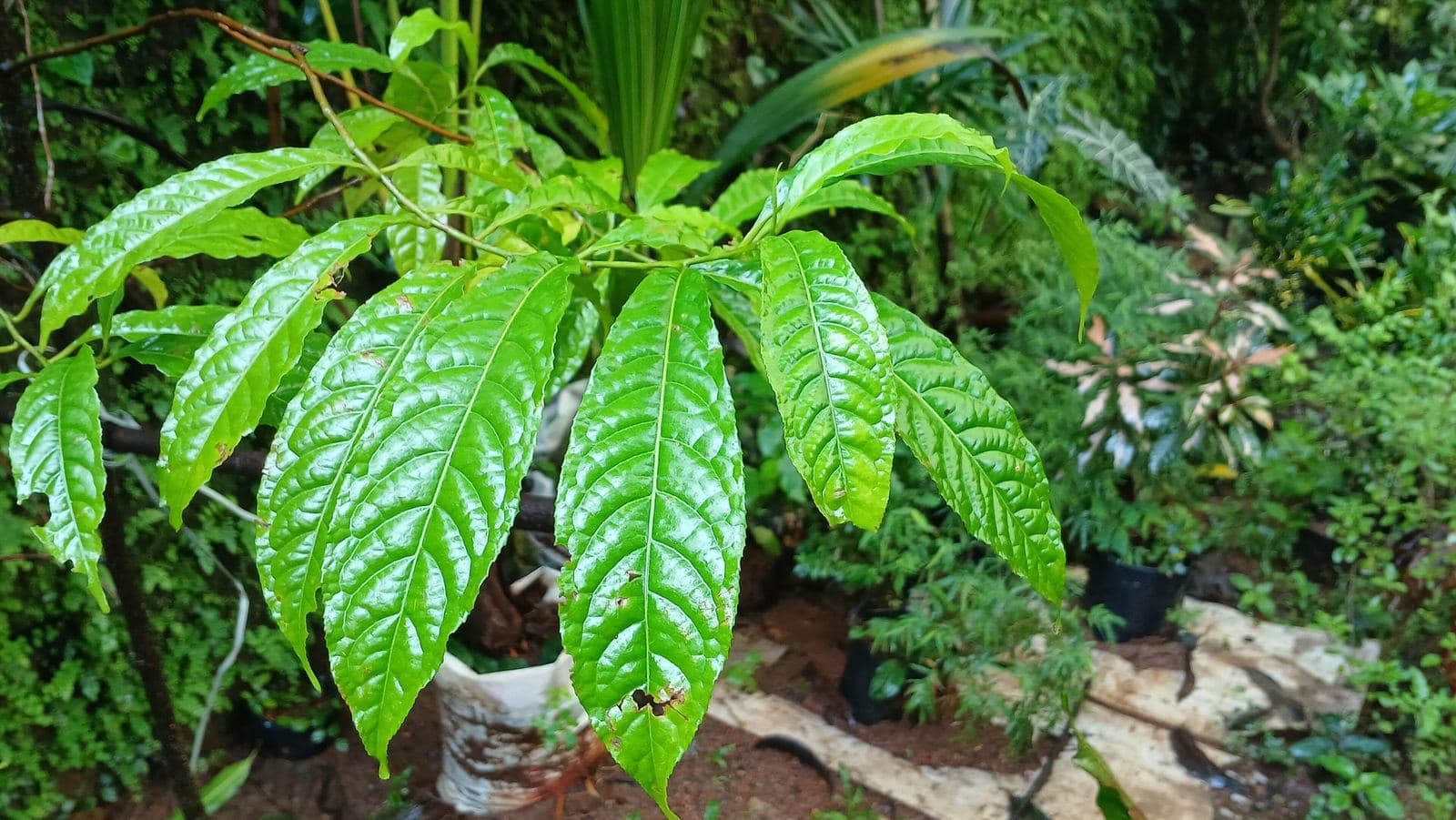
Rudraksha plants, grown from our own trees
We are a registered Rudraksha farm in the Arun Valley, and beads are only half of what leaves it. The other half is living: seed-grown and grafted saplings raised in our own beds, from seed off trees we pick ourselves.
- Species
- Elaeocarpus ganitrus
- Raised at
- Sankhuwasabha, Nepal
- Lifting season
- June – Aug
- Grades
- 4
Why we sell the plant as well as the bead
A bead is the end of a process that took a tree seven years to start. We have the trees, so we have the seed, and a nursery is what you do with seed if you are farming rather than trading. The beds were there long before this site was.
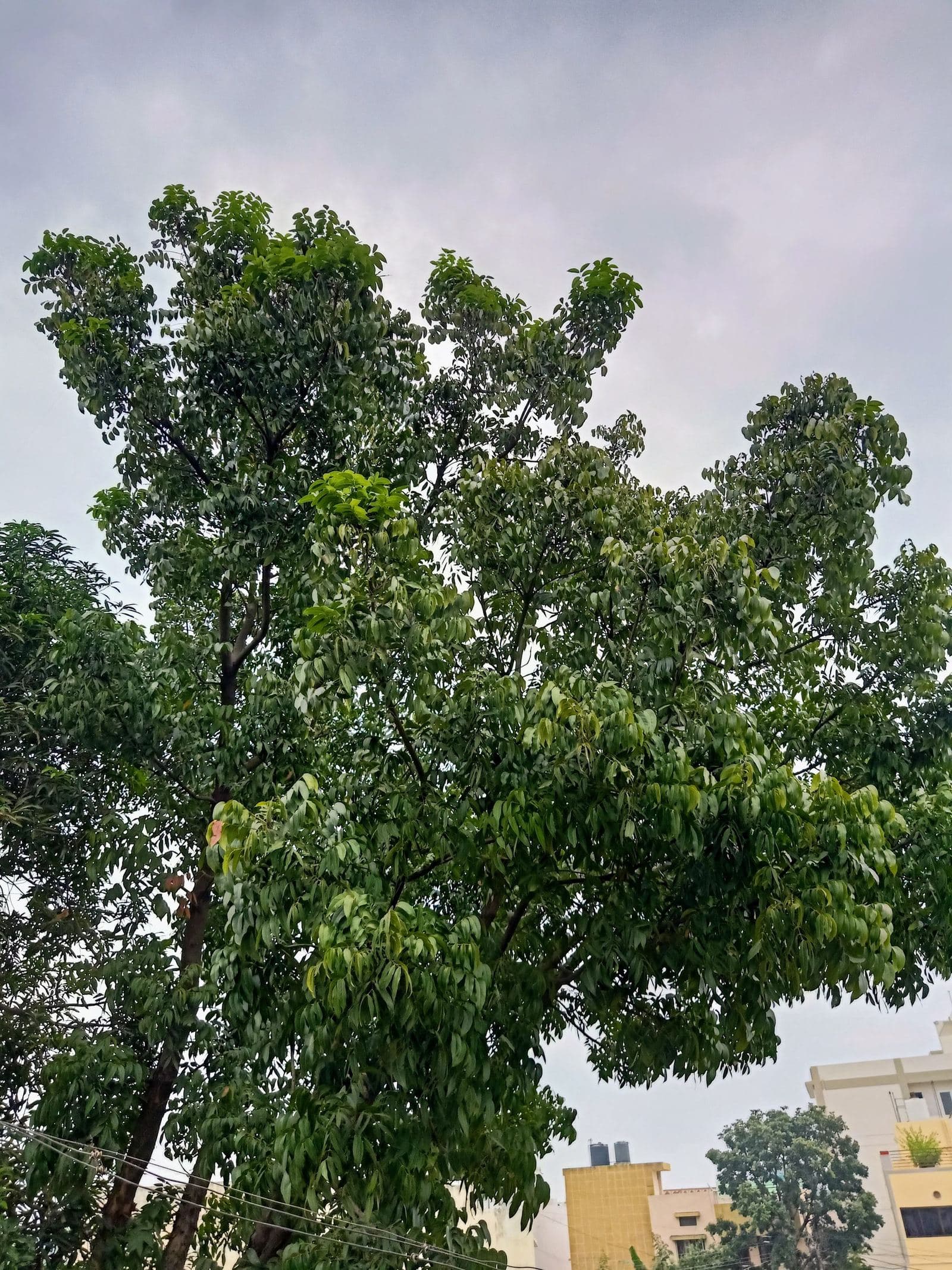
Temples, ashrams, farms and households in Nepal and India buy plants from us to put in the ground. Further afield it is usually one tree, for a courtyard or a conservatory, and the honest answer there is often that it will grow beautifully and never fruit. We would rather say that before you pay than after.
What is in the beds
The grades we raise
Age and height are how a nursery is actually sold — a sapling is priced by how many seasons of work are already in it. Everything here leaves in a pot or balled, never bare-rooted.
PROVISIONAL These grades describe what the nursery normally carries. Exact stock and sizes are confirmed against the beds when you enquire, not taken from this page.
Seedling, first year
Raised in the nursery beds from seed off our own trees. Still soft-stemmed and still under shade cloth, so it wants a protected spot for its first two seasons.
- Propagation
- Seed-grown
- Age leaving us
- 10–14 months
- Height
- 30–45 cm
- First fruit
- Around seven years from seed
Planting a tree you intend to grow with
Seedling, ready to plant out
Hardened off and woody at the base. This is the age at which a Rudraksha stops being fragile — it takes a move, it takes full sun on these slopes, and it will handle a monsoon without staking.
- Propagation
- Seed-grown
- Age leaving us
- 2–3 years
- Height
- 60–90 cm
- First fruit
- Around seven years from seed
Orchard planting, temple and ashram grounds
Grafted sapling
Grafted onto seedling rootstock from a mother tree in our own orchard that we have picked from for years. It carries that tree’s habit and it fruits years sooner than seed, which is why planted orchards use grafted stock.
- Propagation
- Grafted
- Age leaving us
- 18–24 months
- Height
- 45–60 cm
- First fruit
- Commonly the fourth to fifth year
Anyone who wants fruit rather than a lifetime project
Potted young plant
Grown on in a pot rather than a bed, for a courtyard, a veranda or a conservatory. Kept as a pot plant it stays a handsome evergreen; it is very unlikely to fruit.
- Propagation
- Seed-grown
- Age leaving us
- 12–18 months
- Height
- 20–30 cm
- First fruit
- Not expected in a pot
A plant to keep, not an orchard tree
How a plant is quoted and sent
- 01
Tell us the country first
It decides everything else, and for some destinations it ends the conversation. We check what Nepal can certify for export and what your side will admit before we discuss grades or money.
- 02
You obtain the import permit
Most countries require one in the importer’s name, applied for before the plant leaves. We cannot apply on your behalf, and we will not ship without seeing it.
- 03
We issue the phytosanitary certificate
Inspected and certified in Nepal against that permit, with the consignment listed by species, count and grade.
- 04
Quoted per consignment, not per plant
Freight, inspection and permit work dominate the cost of a live plant and none of them scales the way a bead does, so there is no price list here. One tree to Europe and forty to an ashram in Nepal are different trades.
Ask about a plant
Send the country you are in, how many plants, and whether you want fruit or a tree to keep. You will get a straight answer about whether it can be shipped there, and a price for the whole consignment.
What people ask
Can you ship a live plant to my country?
Sometimes, and it depends entirely on where you are. A living plant crosses a border on a phytosanitary certificate issued in Nepal and, in most countries, an import permit you obtain at your end first. Some countries refuse bare-rooted stock outright. Tell us your country before anything else and we will say plainly whether it can be done.
How long before it bears fruit?
From seed, commonly around the seventh year, and full cropping from roughly the fifteenth. Grafted stock is considerably faster because the graft is already mature wood — fourth to fifth year is normal. Anyone who tells you a Rudraksha will fruit in two years is selling you something else.
Will it grow where I live?
It wants warm humid summers, a real wet season, well-drained soil and no frost. On our slopes that means roughly 1,000 to 2,000 metres. Outside the subtropics it grows happily as a glasshouse or courtyard evergreen but will almost certainly never fruit. Plant it for the leaves in that case, and we will say so rather than take the order.
Which mukhi will the beads be?
Nobody can tell you, and nobody can select for it. A single tree drops a whole distribution of face counts in one season, mostly 5 Mukhi, and you find out what you have after the fruit is off. A nursery offering a "1 Mukhi sapling" is not describing anything that exists.
When can it be lifted and sent?
Plants move at the start of the monsoon, roughly June to August, which is when a young tree can be lifted and re-established with the least check. Orders outside that window are held at the nursery until it opens rather than sent at the wrong time of year.
Not after a tree? Every bead we have comes off the same slopes, and the farm page walks through the year that produces both.