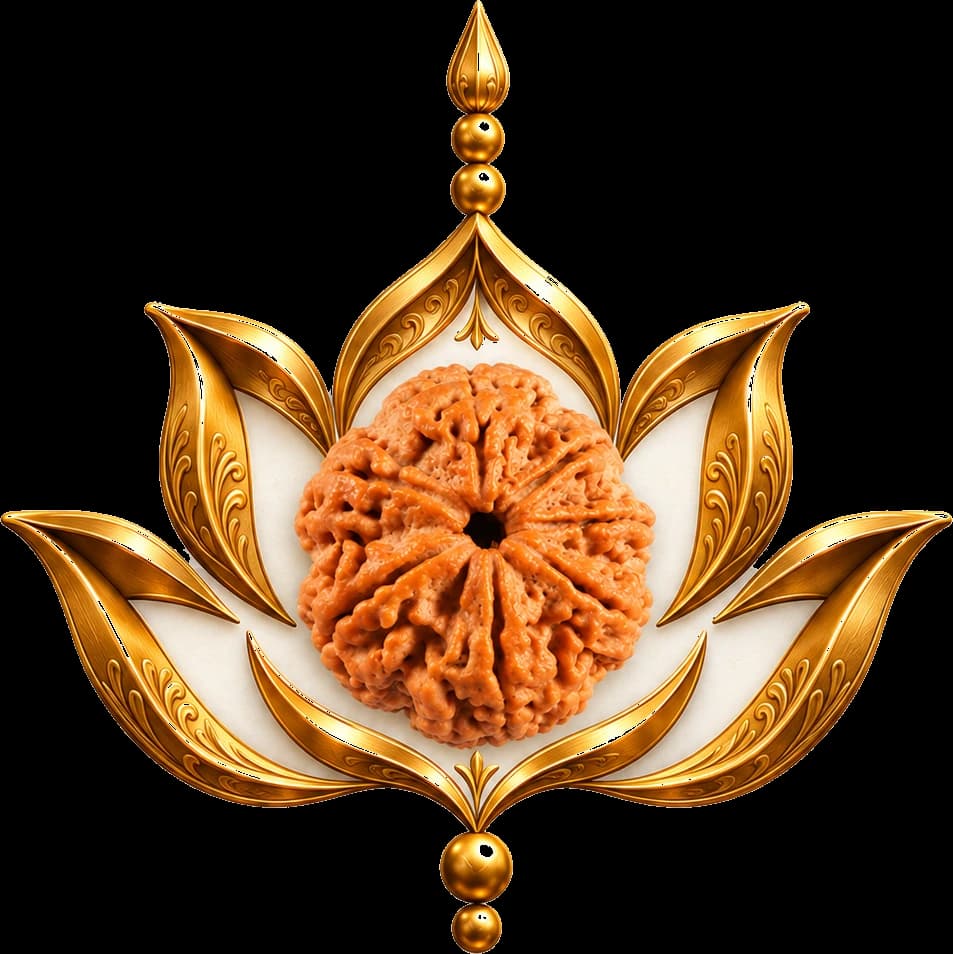
Chemically treated Rudraksha: what is done to beads, and what a buyer can check
Last updated · By Jeshan Rai, second-generation grower who runs the farm at Nepal Rudraksha Dana
Two very different things are sold under one worry. One of them you can often see for yourself; the other, reported from Nepal’s Rudraksha villages in June 2026, no test shows.
The short answer
A chemically treated Rudraksha is one that has been dyed, polished or oiled after harvest, or grown with plant growth regulators injected into the buds on the tree. Surface treatments can often be seen or washed out. Growth-regulator use cannot be detected by any test open to a buyer, including the X-ray we run on every bead.
Key facts
- Traders in Bhojpur report injecting Rudraksha buds with plant growth regulators up to four times early in development. (The Tribune / ANI, June 2026)
- Nepal has not approved plant growth regulators for Rudraksha, and farmers obtain them through unofficial channels. (Business Today, June 2026)
- Nepal Rudraksha Dana does not use plant growth regulators on its Rudraksha trees. (Farm records, all seasons)
- We do not dye, oil, polish or acid-clean our beads before sale; they are sold as they come from drying and sorting. (Farm records, every season)
- Nepal Rudraksha Dana X-rays every bead it sells, and a bead whose chamber count disagrees with its surface lines is rejected rather than graded down. (Farm records, every season)
- Nepal Rudraksha Dana holds no external accreditation; the X-ray, the measurements and the guarantee are our own. (Farm records, as of September 2026)
What does chemically treated Rudraksha mean?
Chemically treated Rudraksha means one of two quite different things. The older meaning is a surface treatment after harvest: dye to deepen the colour, lacquer or heavy polish for shine, or oil to darken and condition the bead. The newer meaning is a treatment on the tree itself, where plant growth regulators are injected into the buds so the seed grows larger or more regular than it would on its own.
The two are easy to confuse because sellers use one phrase for both. A surface treatment changes how a finished bead looks. A growth regulator changes how the seed grew. The first can usually be seen or washed off; the second leaves nothing a buyer can test for.
| Treatment | When it is done | What it changes | Can a buyer see it? | Is the bead fake? |
|---|---|---|---|---|
| Dye | After cleaning | Colour | Often: colour comes off on a damp white cloth | No. Many genuine beads are dyed |
| Lacquer or heavy polish | After drying | Shine; can hide cracks and repairs | Usually, by an even, glassy surface | Not by itself, but look closely at what it covers |
| Oil | After drying, and as routine care | Darkens the bead; keeps it from drying out | Sometimes, by feel or smell | No. Oiling is ordinary care |
| Plant growth regulators | On the tree, at the bud stage | Size, shape and how full the seed looks | No known test | It is a real Rudraksha seed, grown unnaturally |
How are growers in Nepal using plant growth regulators on Rudraksha?
Some growers in Bhojpur district inject Rudraksha buds with plant growth regulators to produce the larger, more regular seeds that Chinese buyers pay most for. Reports by ANI, Business Today and The Tribune in June 2026 describe traders injecting buds up to four times in the early stages of development.
The demand behind it is ornamental. In the same reports, the mayor of Sadananda Municipality says Chinese buyers wear the seeds as ornaments, while Indian buyers want them for religious use. A Bhojpur farmer quoted by Business Today says natural seeds are "not that attractive" to those buyers, and that treated seeds look stronger.
Plant growth regulators are not approved for Rudraksha in Nepal. According to the reports, farmers buy them through unofficial channels and supplies have at times been confiscated by police. The same farmer warned that four to five years of continued use leaves a tree unable to fruit as it did before.
These reports describe Bhojpur district. Our trees are in the Arun Valley in Sankhuwasabha district. We make no claim here about what any other grower does; the reporting is the best public account we know of, and we cite it as that.
Can you tell if a Rudraksha has been chemically treated?
You can often tell if a Rudraksha has been dyed, lacquered or oiled, but no test open to a buyer shows whether it was grown with plant growth regulators. Surface treatments sit on the bead and can be seen, felt or washed out. A growth regulator acts on the living seed months before harvest and leaves no mark that anyone has shown a buyer how to read.
Checks that work for surface treatments
- Dye: rub the bead with a damp white cloth, or leave it in warm water for an hour. Colour on the cloth or in the water means dye. It does not mean the bead is fake.
- Lacquer: look at the valleys between the lines. A natural bead is matt to softly glossy, with the grooves as clean as the ridges. Lacquer tends to collect in the grooves and gives the whole bead one even, glassy shine.
- Oil: a freshly oiled bead is darker, faintly tacky and smells of the oil.
- Heavy polish over a repair: turn the bead under a bright light. A crack that has been filled and polished shows as a line where the texture changes.
Why growth regulators cannot be checked
A plant growth regulator changes how the seed grows, not what it is made of on the surface. An X-ray shows the chambers inside a bead and whether they match its lines, which is why it catches carving and gluing. It shows nothing about hormones. We know of no laboratory that tests a dried Rudraksha for growth-regulator residue as a service to buyers.
Nor is size a reliable sign. Natural beads vary widely from tree to tree and season to season, so a large, even bead is not proof of treatment, and a small one is not proof of its absence. With no test on the bead, the only check left is the seller: who grew it, and whether they will state in writing how.
What sellers get wrong about chemically treated Rudraksha
- "An X-ray certificate proves the bead was never treated." It proves the chamber count. Our guide to reading a Rudraksha X-ray sets out what the film can and cannot show.
- "A dyed bead is a fake bead." Dye changes the colour of a genuine seed. How to check whether a bead is genuine is in our guide to identifying an original Rudraksha.
- "The water test shows chemicals." Whether a bead sinks or floats depends on how dry it is, whether it has been oiled and how much air its chambers hold. It says nothing about treatment.
- "A shiny bead has been treated." A bead worn for years takes on a sheen from handling. Shine is a reason to look more closely, not a verdict.
- "Bigger is always better." Size is exactly what the growth regulators reported in Bhojpur are used to increase. A large bead is worth what its size, surface and records say, not more because it is large.
Does chemical treatment matter to the person wearing the bead?
We know of no published study on whether a bead grown with plant growth regulators affects the person who wears it, and we will not guess at one. The concerns raised in the June 2026 reports are about the trees, the growers and honest labelling, not about the wearer.
Surface treatments are more practical. Dye on a new bead can rub off onto skin or a white shirt for the first few weeks. If that matters to you, ask before you buy. Advice on day-to-day care is in our guide to wearing a Rudraksha.
What we see on the farm
On our farm and among the growers around us, growth regulators are not part of ordinary Rudraksha farming. Where the medicine is used, in our experience, it is for a specialised product for Chinese buyers, not for the beads that are grown, sorted and sold in the ordinary way.
That is why the question to ask is not where a bead came from but how it was grown. A bead from a district with no growth-regulator reports can still come from a treated tree, and a bead from Bhojpur can come from a grower who has never used one.
How does Nepal Rudraksha Dana grow and process its beads?
Nepal Rudraksha Dana grows its Rudraksha in the Arun Valley and harvests from October to December each year. Nepal Rudraksha Dana does not use plant growth regulators on its trees; the owner has confirmed this in writing. We collect both fruit that has fallen and ripe fruit picked from the tree.
Fully ripe fruit is cleaned straight away; less ripe fruit soaks for up to several days first. We dry the beads by more than one method, in the sun and in shade. We do not dye, oil, polish or acid-clean any bead before sale. We then sort every bead by face count first, by diameter in millimetres second and by surface condition third, and X-ray every bead before it is listed. A bead whose chambers disagree with its lines is rejected rather than graded down.
We hold no external accreditation; the X-ray and the records are our own. How the check works is on our authenticity page, and the figures behind this section are on Rudraksha facts from the farm.
How do you buy a Rudraksha that has not been chemically treated?
To buy a Rudraksha that has not been chemically treated, buy from someone who knows how it was grown and will say so in writing. A grower can answer that question; a trader three hands removed from the tree often cannot, however honest they are.
- Ask whether the bead was grown with plant growth regulators, and whether it has been dyed, lacquered or oiled. Ask for the answer in writing.
- Ask which harvest and which district it came from. A seller who can name both is a seller with records.
- Check the surface yourself with the damp-cloth and light tests above.
- For any rare face, ask for the X-ray of that bead, not a sample image.
Every 5 Mukhi Rudraksha we sell comes with its own X-ray and measurements. If you are choosing by purpose rather than by face, the beads are also grouped by what they are traditionally worn for.
Questions people ask us about this
How do you know if a Rudraksha is chemically treated?
You can check a Rudraksha for dye, lacquer and oil, but not for growth regulators. Rub it with a damp white cloth for dye, look for an even glassy shine and filled grooves for lacquer, and note a darker, tacky surface for oil. No test open to a buyer shows whether the seed was grown with plant growth regulators.
Is a chemically treated Rudraksha fake?
A chemically treated Rudraksha is usually a genuine seed that has been changed, not a fake. Dye, polish and oil alter the surface of a real bead, and growth regulators alter how a real seed grew. A fake is a different object: carved wood, resin, or a bead with carved or glued lines, which an X-ray will show.
Can an X-ray show if a Rudraksha was treated with growth hormones?
No, an X-ray cannot show whether a Rudraksha was grown with growth hormones. An X-ray shows the chambers inside a Rudraksha and whether their number matches the lines on the surface, which is how it catches carved and glued beads. It shows nothing about hormones or how the seed was grown. Treat any seller who says an X-ray proves a bead was never treated with caution.
Why are farmers in Nepal using chemicals on Rudraksha?
Some Nepali farmers use plant growth regulators because Chinese buyers pay more for large, regular seeds worn as ornaments. June 2026 reports from Bhojpur describe buds injected up to four times early in development. The regulators are not approved for Rudraksha in Nepal, and farmers quoted in the reports worry about the long-term health of their trees.
Is it safe to wear a dyed Rudraksha?
A dyed Rudraksha is generally worn without trouble, though dye on a new bead can rub off onto skin or pale clothing for the first few weeks. Wipe it with a damp cloth until no colour comes away. If your skin reacts to it, stop wearing it and wash the area; a reaction to dye or oil is a matter for a doctor, not a bead seller.
Does Nepal Rudraksha Dana use chemicals on its Rudraksha?
Nepal Rudraksha Dana does not use plant growth regulators on its trees, which the owner has confirmed in writing. We do not dye, oil, polish or acid-clean any bead before sale: each one is sold as it comes from drying and sorting, after an X-ray. Oiling is something you may choose to do yourself later, as ordinary care.
Sources
- Rudraksha farming in Nepal: Prosperity meets peril as farmers chase Chinese market demand, ANI, 12 June 2026.
- Rudraksha farming in Nepal: Prosperity meets peril as farmers chase Chinese market demand, The Tribune (ANI), 12 June 2026.
- From cosmic to cosmetic: Why communist China is obsessed with Hindu sacred Rudraksha, Business Today, 20 June 2026.
- Nepal Rudraksha Dana farm records, checked September 2026. The confirmed figures are listed on Rudraksha facts from the farm.