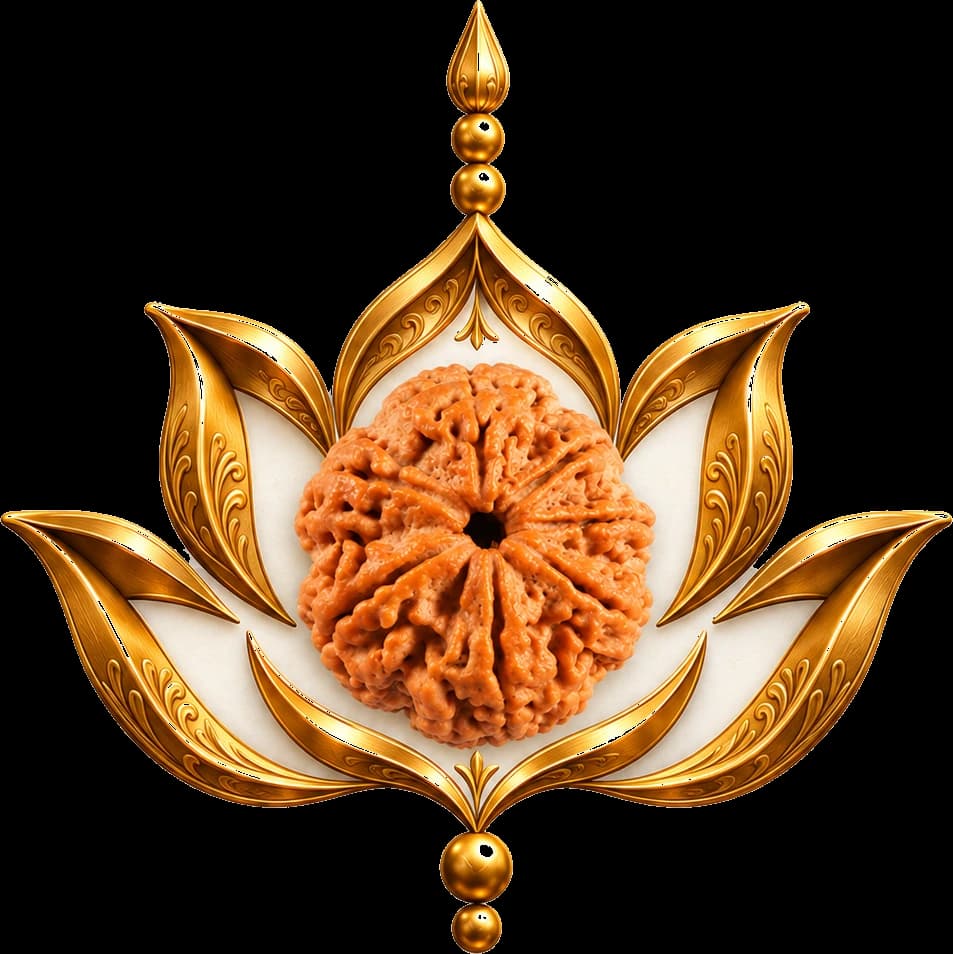
7 MukhiPhotograph coming soon
7 lines · 7 chambers
7 Mukhi
Saturn (Shani)
CommonPrice on request
Your basket
Empty. While we confirm our price list, every bead is priced on request: tell us the bead and the size, and we quote it with its X-ray. There is no online checkout: you order through our contact form, by email or on WhatsApp.
Ask about a beadBrowse the beadsBy purpose
Traditionally worn when facing sustained difficulty or delay.
7 lines · 7 chambers
Saturn (Shani)
8 lines · 8 chambers
Rahu
9 lines · 9 chambers
Ketu
14 lines · 14 chambers
Saturn (Shani)
X-rayed before listing
Ketu / Mars
When a delay or difficulty will not shift, the tradition turns first to Ganesha, the remover of obstacles.
The 8 Mukhi and the Ganesh Rudraksha are both his. The 7 Mukhi and 14 Mukhi are chosen when the obstacle feels like Saturn — slow, heavy and long. The 9 Mukhi is chosen when it feels like opposition from outside.
| Bead | Presiding deity | Planet | Chakra | Rarity | Worn traditionally for |
|---|---|---|---|---|---|
| 7 Mukhi | Goddess Mahalakshmi | Saturn (Shani) | Manipura (Solar Plexus) | Common | Wealth flow, business prosperity, relief from Shani dasha, career stability |
| 8 Mukhi | Lord Ganesha | Rahu | Muladhara (Root) | Moderate | Removes obstacles, ends repeated failure, restores direction, Rahu remedy |
| 9 Mukhi | Goddess Durga | Ketu | Muladhara (Root) | Moderate | Fearlessness, dynamic energy, control over desire and overwhelm, Ketu remedy |
| 14 Mukhi | Hanuman / Devamani | Saturn (Shani) | Ajna (Third Eye) | Rare | Intuition, third-eye activation, unsticks delayed progress, Sade Sati remedy |
| Ganesh Rudraksha | Lord Ganesha | Ketu / Mars | Muladhara (Root) | Moderate | Bead with a natural trunk-like protrusion; removes obstacles in new ventures |
The beads most often chosen are 7 Mukhi, 8 Mukhi, 9 Mukhi, 14 Mukhi. These are traditional associations, not treatments — if you are dealing with something serious, see a doctor as well.
We will not give you a number, because we would be making it up. Traditionally a bead is worn continuously and treated as part of a practice rather than as a device with an effect date.
These are traditional associations recorded in Vedic and Puranic sources. They are described here as tradition, not as medical or therapeutic claims, and no bead is a substitute for medical care.