
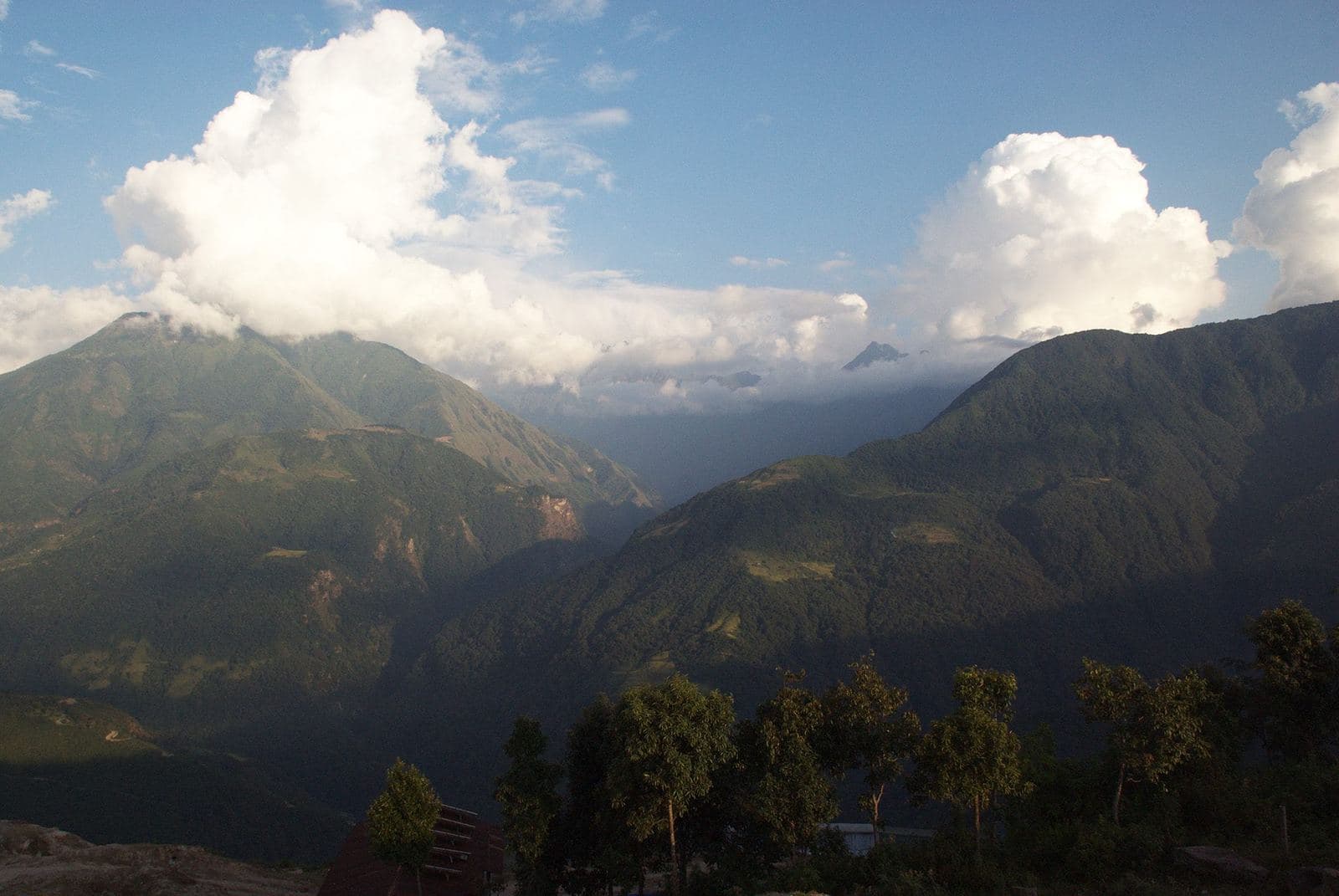
The farm, the valley and the family
We are a registered Rudraksha farm in the Arun Valley in Sankhuwasabha district, in eastern Nepal. The trees are ours. The people who pick the fruit are our family and our neighbours. The beads are sorted at our own collection point, and shipped from here — and the same trees supply the seed for the saplings we raise in the nursery.
Nearly every Rudraksha shop online buys finished, sorted beads from a wholesaler, who bought them from a collector, who bought them from someone at the tree. Each hand adds a margin and removes a fact. By the time a bead reaches a retail site, nobody can say which slope it grew on.
We are the first hand. That is the only real difference between us and the rest, and it is why every bead page here carries a harvest season, a village and a sorting date instead of adjectives.
- District
- Sankhuwasabha
- Province
- Koshi, Nepal
- Harvest
- Sept – Nov
- Bead sizes
- 14–40 mm
- Status
- Registered farm
- Also here
- Nursery
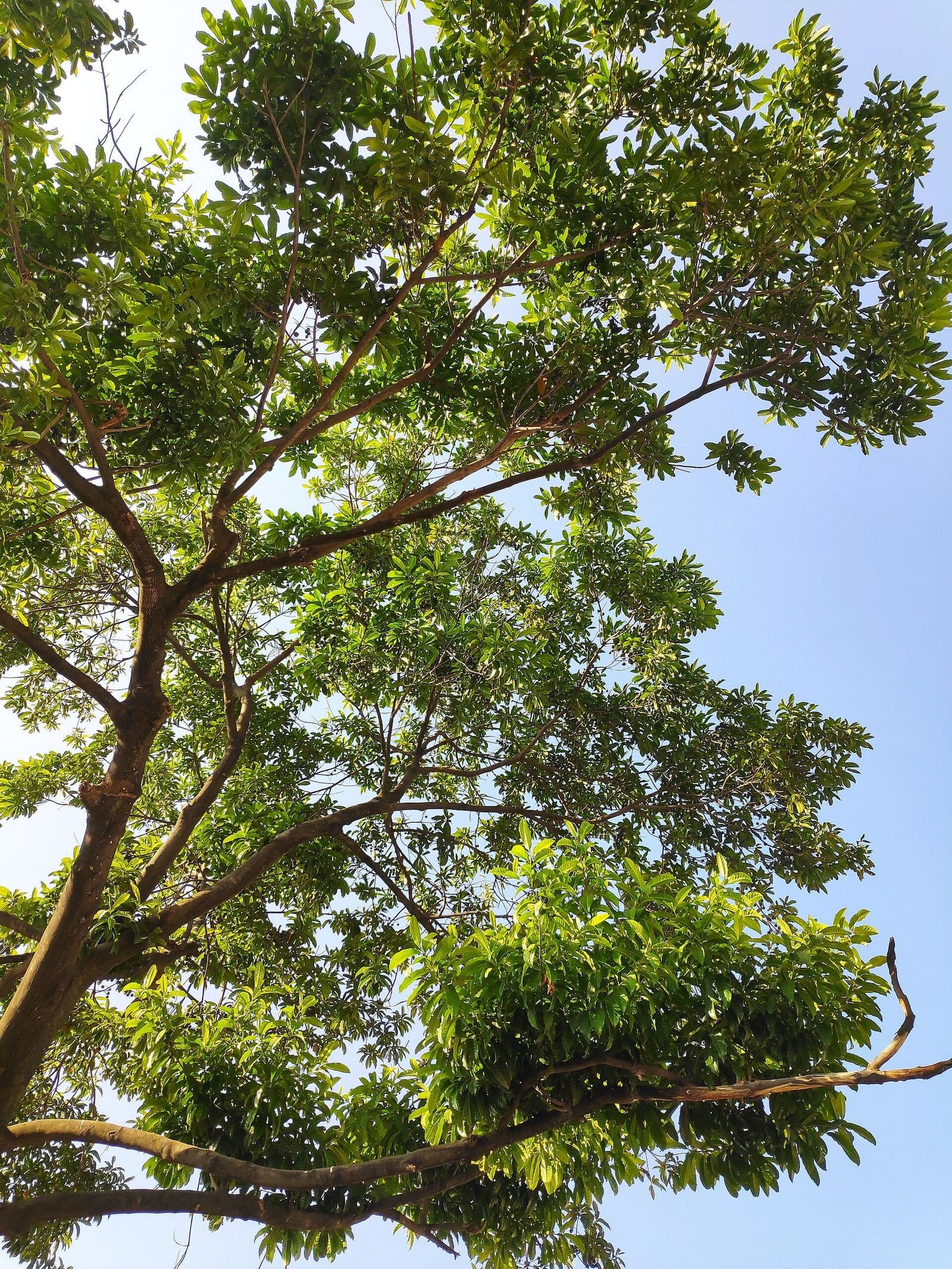
The tree the bead comes from
Rudraksha is the stone of the fruit of Elaeocarpus ganitrus, a broad evergreen that grows well on these slopes between roughly 1,000 and 2,000 metres. A mature tree fruits once a year and keeps doing it for decades.
The fruit is bright blue and about the size of a cherry. The bead is the seed inside it. Everything we sell starts as fruit on a branch that somebody in our family had to climb to reach.
October to the following autumn
What a year looks like
- June – August
The fruit sets
The trees flower and fruit through the monsoon. Nothing is picked. Beads taken early are soft and sort badly, which is where a lot of poor stock comes from.
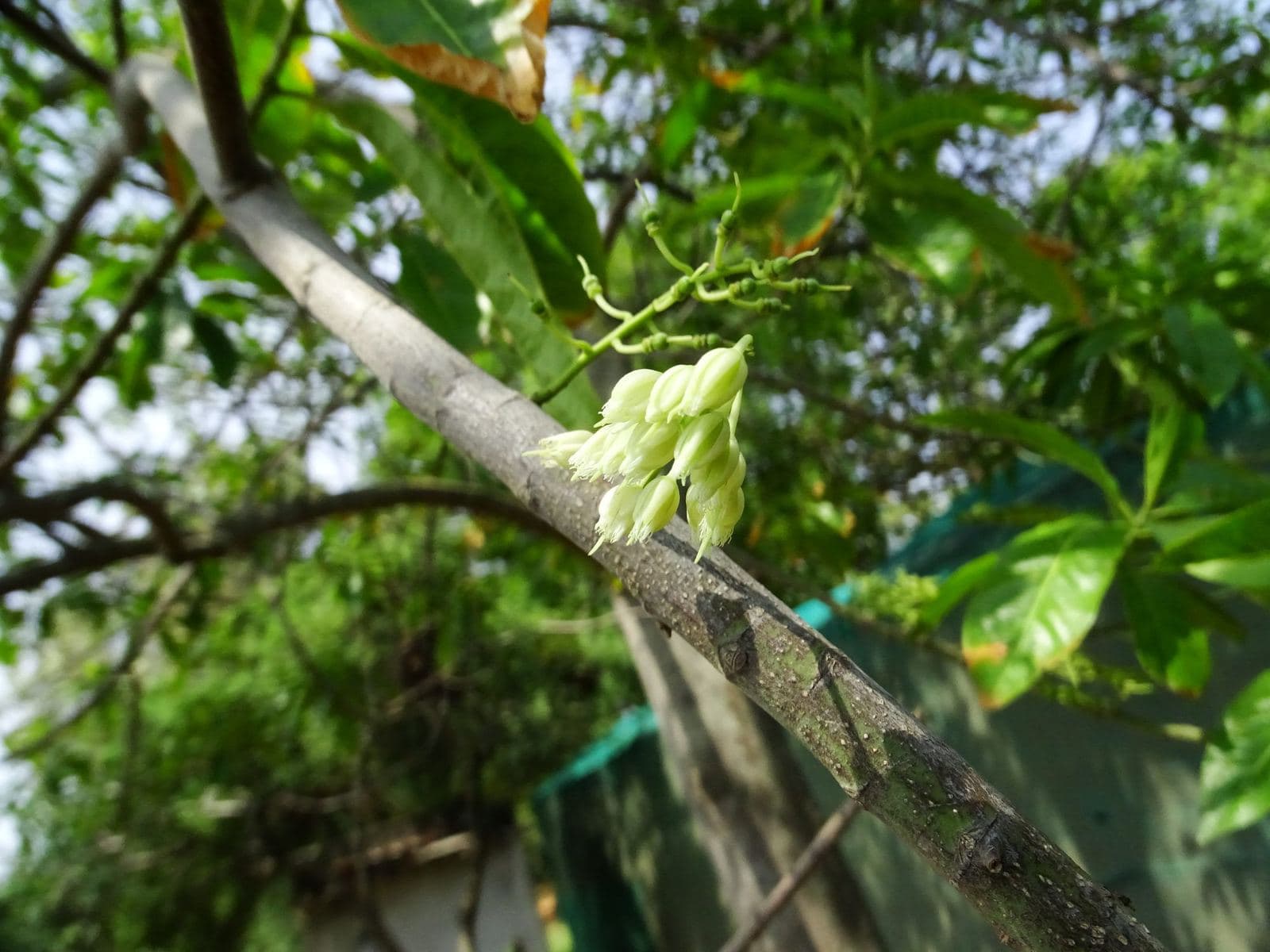
- September – November
Picking
Ripe fruit is collected by hand from our own trees and from a small number of neighbours we have worked with for years. Every basket is tagged with who picked it and where.
- November
Soaking and cleaning
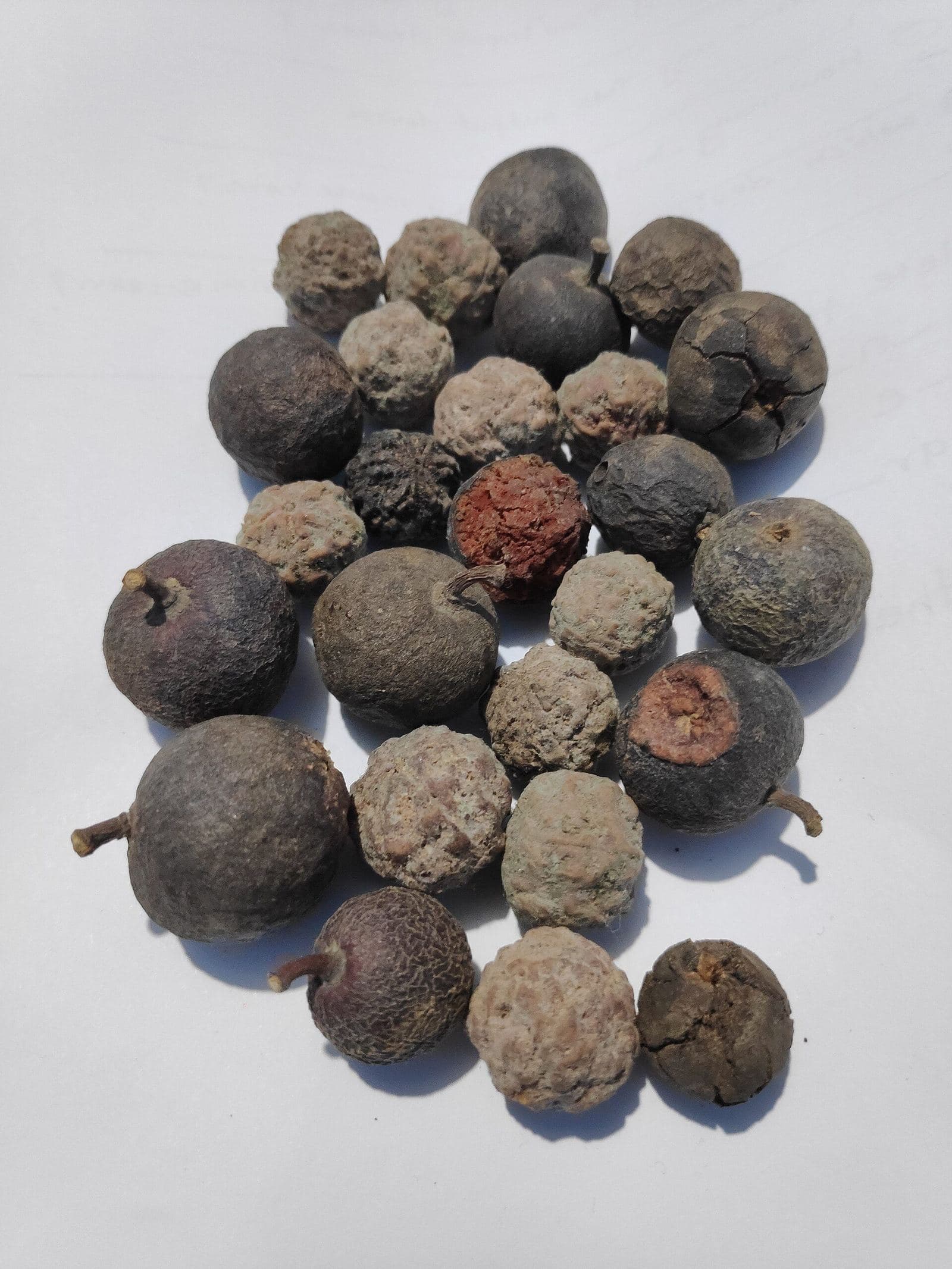
The blue outer fruit is soaked off and the seed cleaned with a brush. No acid, no dye. This is when the mukhi lines first become readable.
- November – December
Sorting and measuring
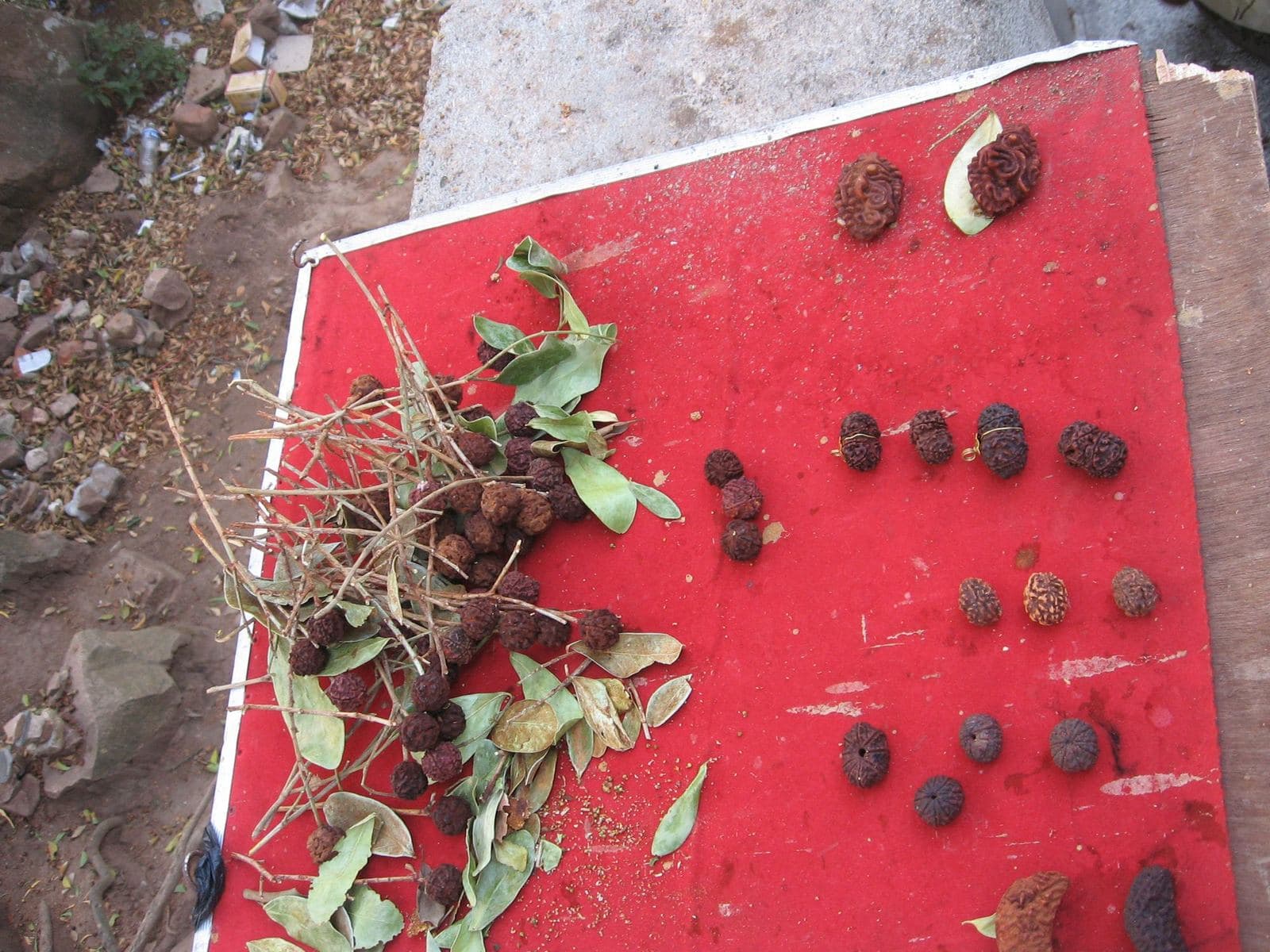
Each bead is counted, measured with callipers and weighed. Chipped, cracked and asymmetric beads come out here. Grades are assigned from measured millimetres, not by eye.
- December
X-ray and certification
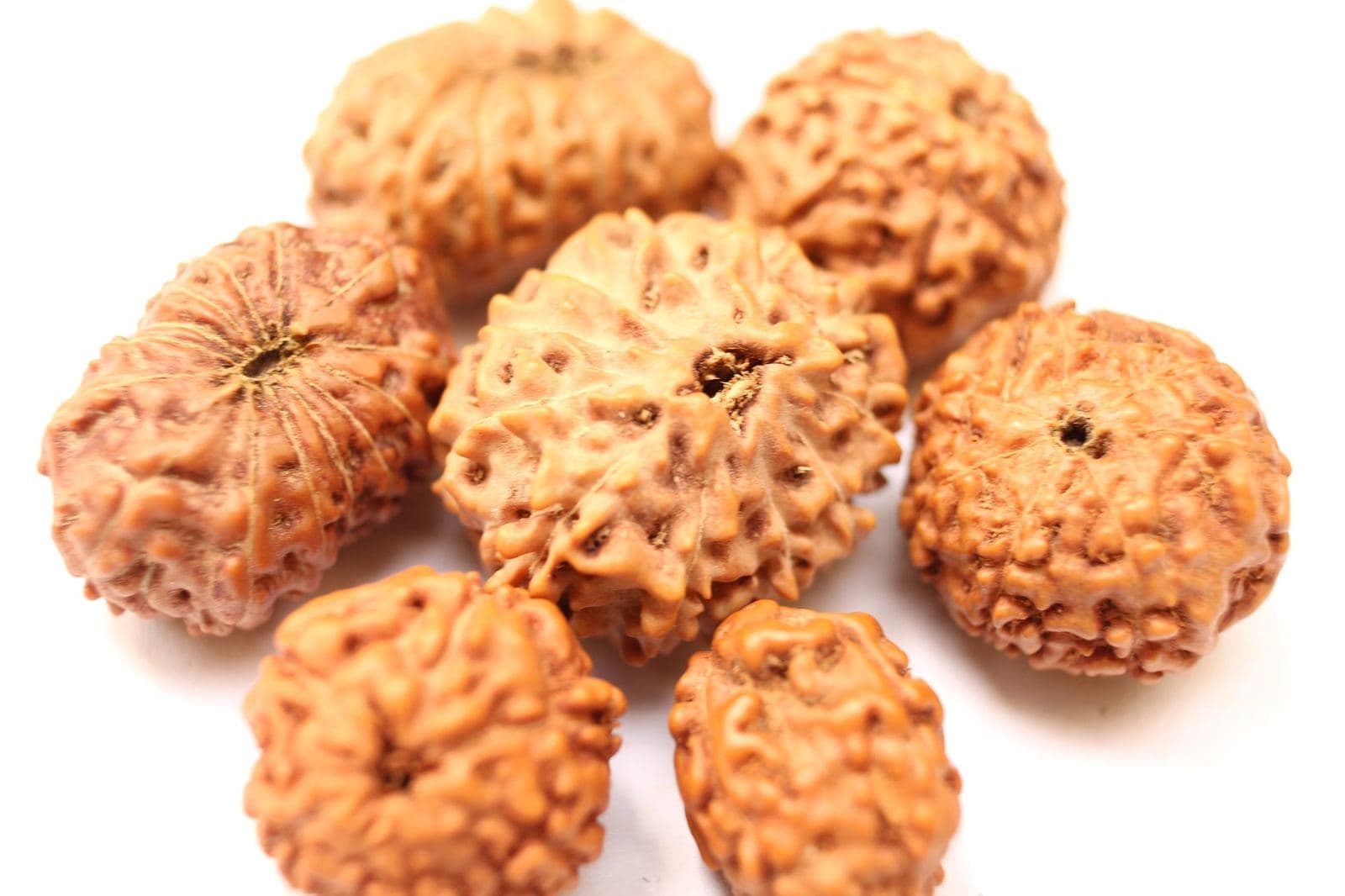
Every bead is X-rayed and its chamber count checked against its surface lines. Anything that disagrees is rejected. The image goes on the bead’s own page.
Stand-ins, and we say so
The valley and the people
These are licensed photographs of the Arun valley and of Rudraksha, not of our own farm — our shoot is being arranged. Every one is credited on the photo credits page, and none of them is presented as a picture of stock.
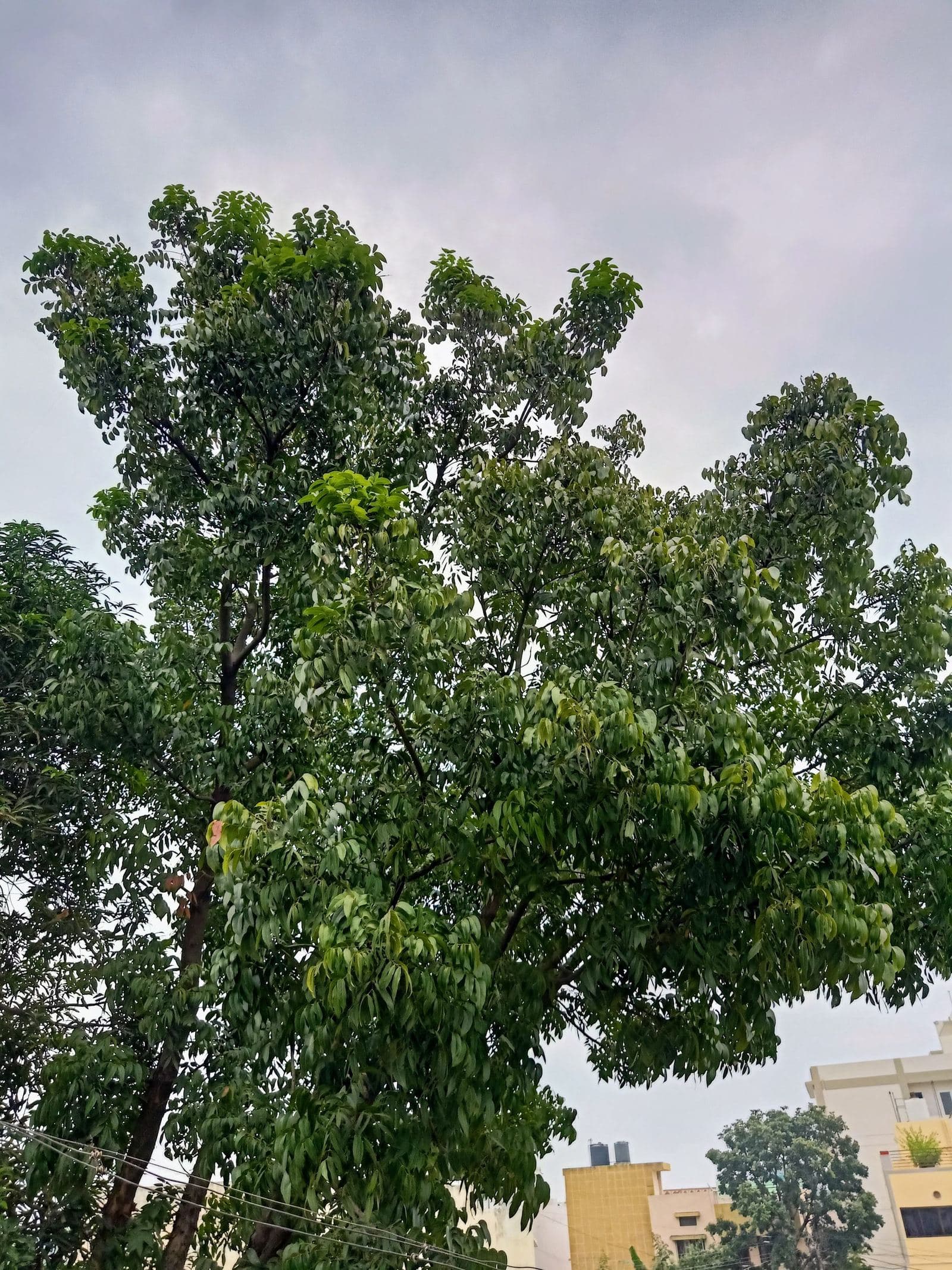
A mature Elaeocarpus ganitrus tree, the tree Rudraksha grows on
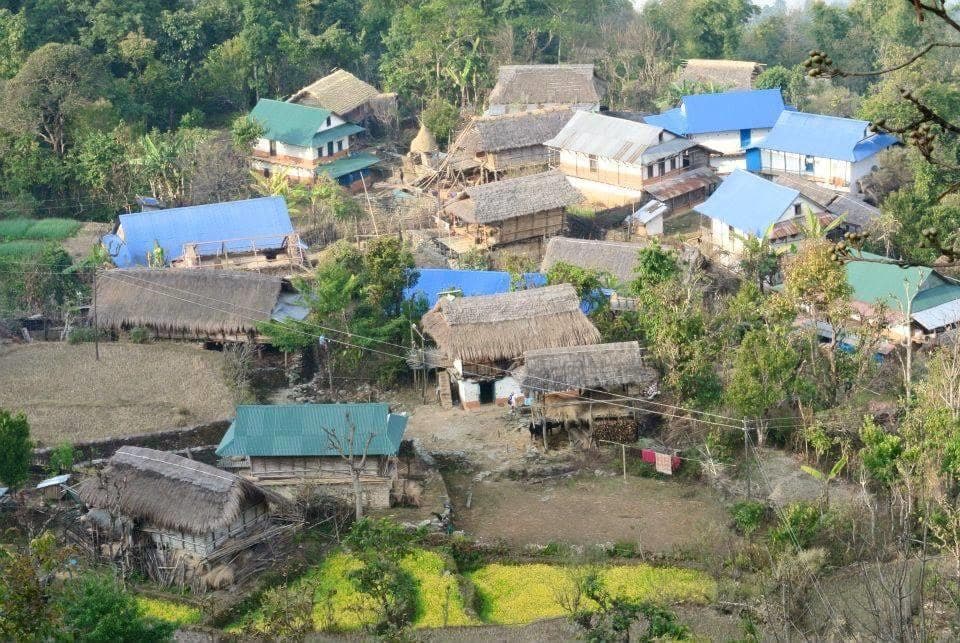
A hillside village of tin-roofed houses among terraced fields in the Arun valley
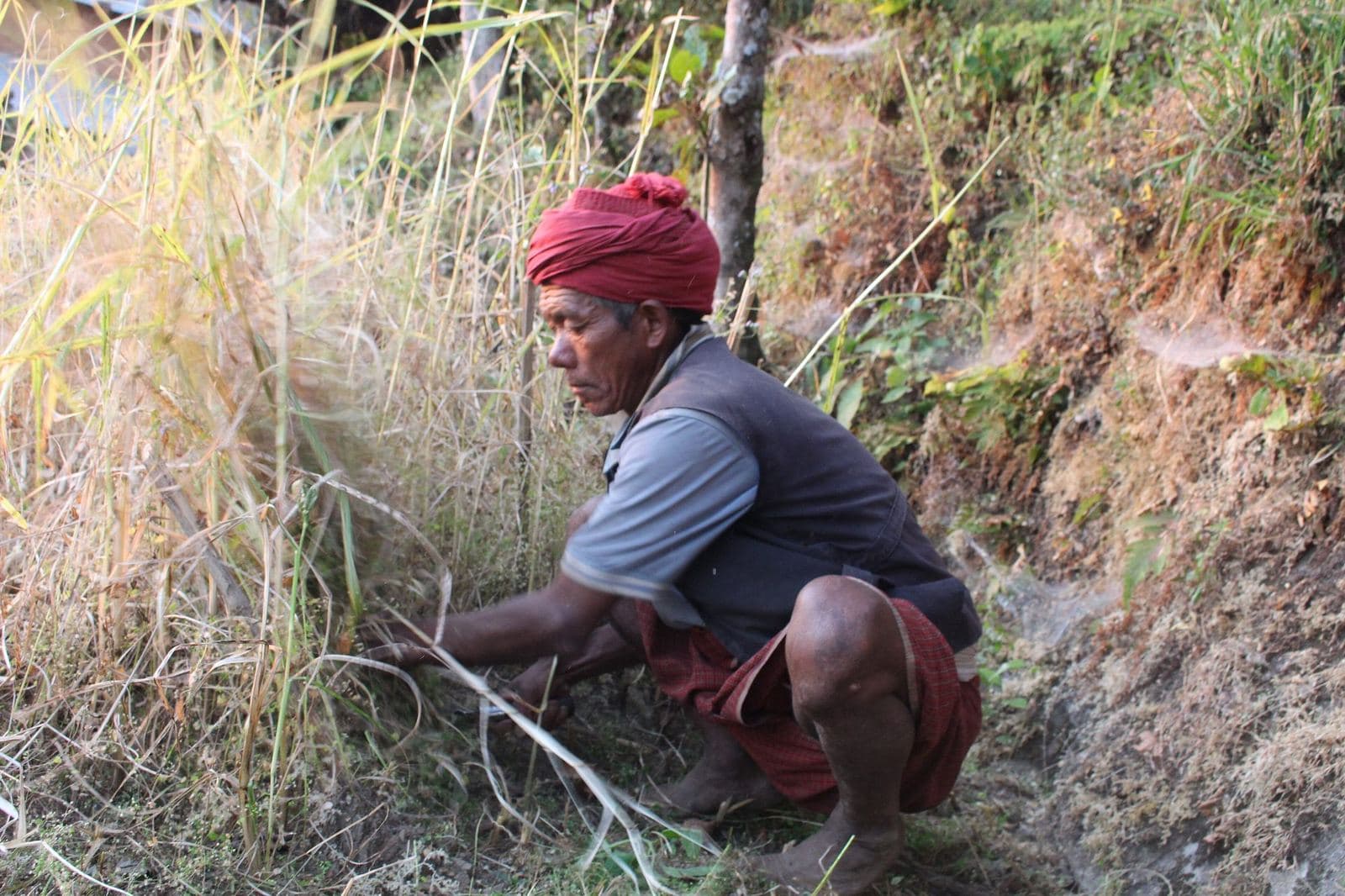
A farmer working a steep hillside plot in rural Nepal
The nursery
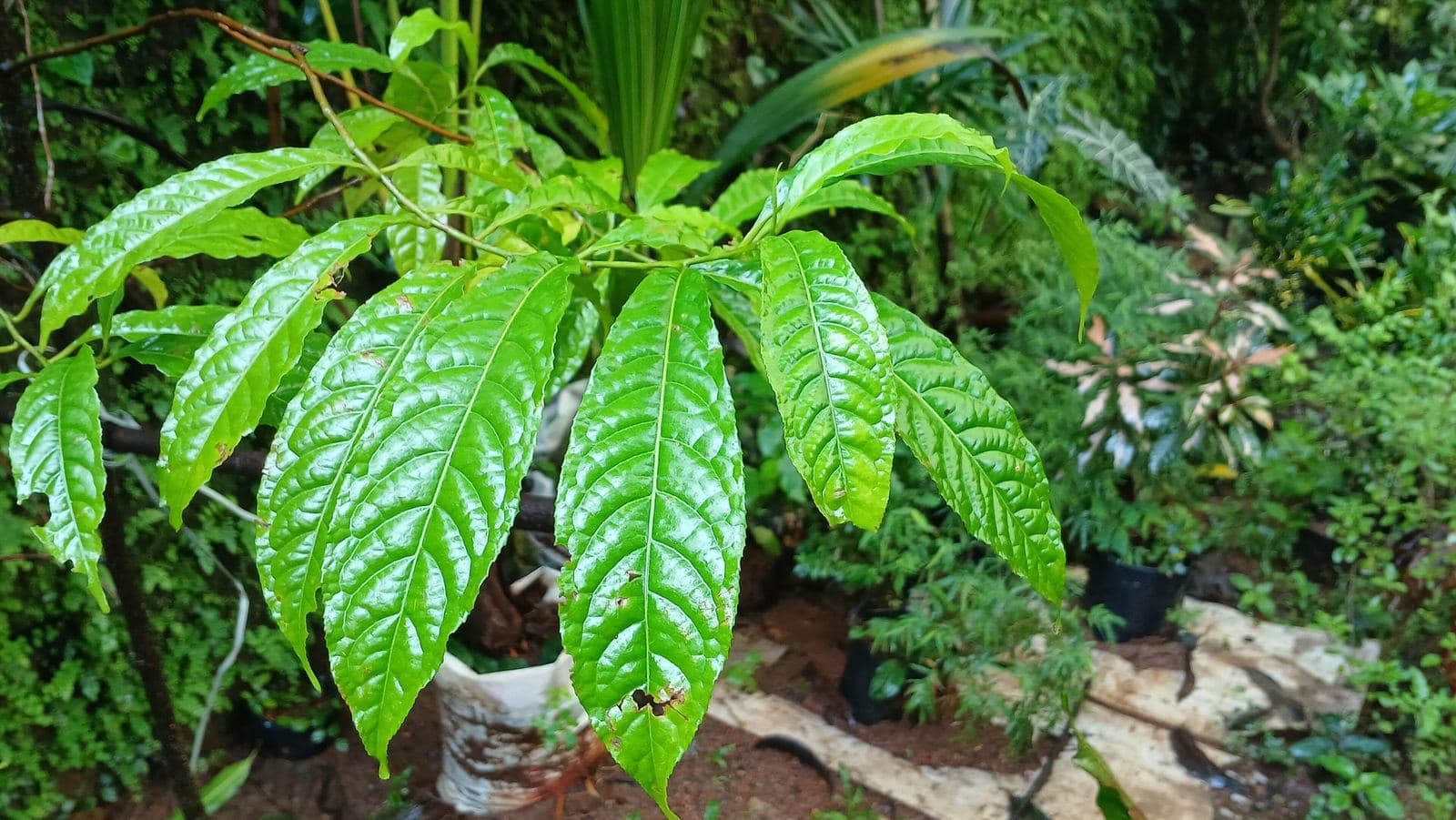
A farm with its own trees has its own seed, so beside the orchard there are beds of young Rudraksha coming on — seed-grown saplings and grafted stock off mother trees we have picked from for years. Two to three years in the beds before one is robust enough to go out.
We sell them. Temples, ashrams and farms in Nepal and India plant them by the dozen; further afield it is usually one tree for a courtyard. A live plant ships on a phytosanitary certificate and your import permit, not in a padded envelope, so it is quoted per consignment rather than listed at a price.
See it on the beads
Every individual bead page carries the harvest season, the collector and the sorting date for that specific bead.